Pay in installments of $6.87 with
 ,
,
 and
and

Shipping Estimate
USA
- USA
- CAN
- USA
- CAN
Ships within 48 hours · Estimated delivery Oct 18 - Oct 23
 Promo Codes Available:
For Your Every Summer RSVP, with Code: SUMMER15
Description
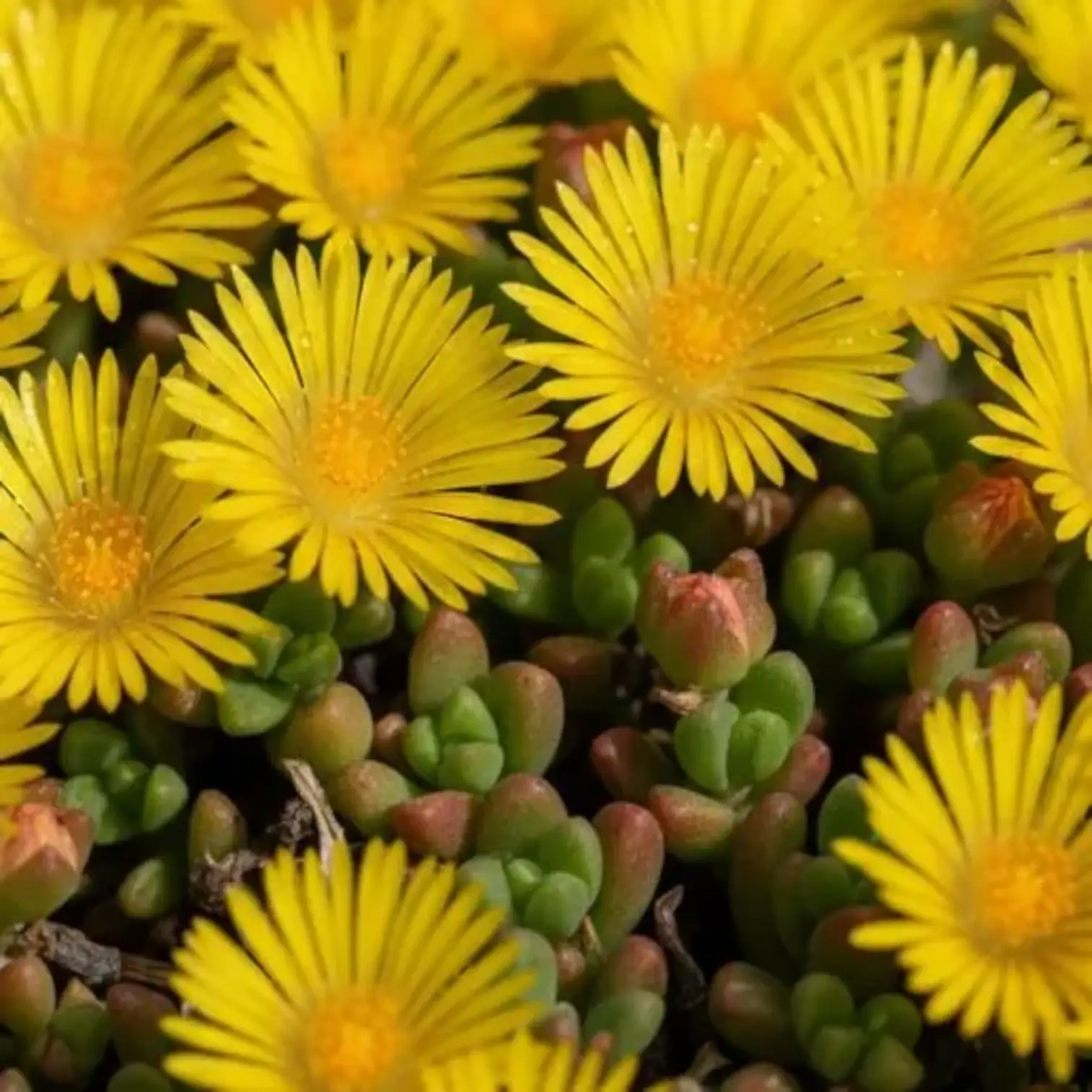
delosperma succulent plant Delosperma congestum (Ice plant) | Outdoor PlantDelosperma congestum compact yellow ice plant for sun and sharp drainage Delosperma congestum is a very low evergreen succulent perennial for sunny rock gardens, gravel edges, troughs and containers. It forms tight mats of fleshy green foliage and produces bright yellow, daisy like flowers in the warmer part of the year. The scale is small, but the effect is clear: a flat, drought adapted plant that sits close to stone, grit and open sunny surfaces.
Delosperma congestum - compact yellow ice plant for sun and sharp drainage
Delosperma congestum is a very low evergreen succulent perennial for sunny rock gardens, gravel edges, troughs and containers. It forms tight mats of fleshy green foliage and produces bright yellow, daisy-like flowers in the warmer part of the year. The scale is small, but the effect is clear: a flat, drought-adapted plant that sits close to stone, grit and open sunny surfaces.
This is a plant for drainage-led planting. Delosperma congestum comes from southern African alpine and rocky habitats, and garden success depends on a similar balance: full sun, lean soil, mineral air around the crown and quick run-off after rain. Cold tolerance is strongest when the root zone stays dry, open and raised above winter wet.
Shape, foliage and flowering style
The plant grows as a mat, usually around 5-10 cm tall. Individual stems creep close to the surface and carry small succulent leaves that store water. In good light the foliage stays compact and firm. During flowering, yellow blooms open above the mat and give a sharp colour contrast to gravel, stone and green foliage.
- Habit: evergreen, mat-forming succulent perennial.
- Height: usually very low, around 5-10 cm.
- Spread: commonly around 20-30 cm in tight garden planting.
- Flower colour: bright yellow.
- Best visual setting: stone, grit, troughs, crevice planting and sunny edges.
Choosing the right outdoor position
Full sun is the starting point. Delosperma congestum needs a bright, exposed position to keep the mat dense and to support flowering. It is well suited to rock gardens, alpine troughs, gravel beds and raised edges where rain drains away quickly. Slopes, crevices and low retaining-wall pockets can also work when the planting medium is gritty and open.
For heavy soils, build a raised mineral pocket opened with grit so rain moves away from the crown. The plant’s roots need oxygen around them during wet periods. A slightly raised planting pocket keeps the crown above the wettest layer after winter rain.
Soil mix for Delosperma congestum
Use lean, sandy or gritty soil. A suitable mix contains a high mineral fraction such as grit, coarse sand, pumice, lava or fine gravel, with only enough organic material to hold light moisture after watering. Keep compost content modest so growth stays firm, compact and free-draining around the crown.
For containers and troughs, choose a shallow but well-drained vessel with open drainage holes. Add a grit mulch around the plant after planting. The mulch keeps leaves away from damp compost, reduces splash marks and visually ties the plant into rock-garden planting.
Watering in troughs, pots and open gravel
Delosperma congestum stores water in its leaves, so watering should be measured. In open ground, water during establishment and then mainly during long dry spells. In pots and troughs, the mix dries faster, but the plant still prefers a wet-dry rhythm.
For pot watering cues, use % of pot depth: water when roughly the top 40-50% of the mix has dried, then let excess water drain fully. In cool weather, wait longer between waterings. A trough may look dry on top while moisture remains lower down, so check with a finger or a slim wooden stick before watering again.
- New planting: water lightly but regularly until roots start to grip the mix.
- Settled plants: water sparingly, mainly during extended dry spells.
- Winter pots: keep the pot raised so rain drains quickly through the mix.
- After flowering: maintain light moisture only if the mat is actively growing.
Cold, winter wet and container reality
Cold tolerance improves when drainage is excellent. A gritty raised bed or alpine trough gives the plant the sharp drainage it needs through winter. Containers keep plants smaller and slower than open ground, and they also expose the root ball to sharper temperature swings. Raise containers on feet or gravel through winter so water can leave the pot freely.
In regions with repeated freeze-thaw cycles, a covered but bright outdoor position can help pots stay drier. The cover should not create warm, still, humid air around the foliage; the plant still needs airflow. The aim is a dry crown, bright light and quick drainage.
Planting distance and use with other alpines
Allow around 30 cm for a settled mat. Delosperma congestum is small enough to combine with other low alpines, dwarf bulbs, sempervivums and compact drought-adapted perennials. It works best with companions that need the same sun and drainage. Keep lush, moisture-loving neighbours in a separate container with a richer mix.
Use it near the front edge of a rock garden, spilling slightly over a stone lip or tucked into a sunny pocket where the yellow flowers can be seen close up. Several plants can make a dotted carpet along gravel, but each mat should still have enough air around it.
Maintenance through the year
Delosperma congestum needs little pruning. Remove dead, damaged or overly loose stems when the plant is actively growing. Spent flowers usually age naturally, and heavy cutting is rarely needed. If a mat becomes woody or open in the centre, take healthy outer pieces as cuttings and refresh the planting in a new gritty pocket.
Feeding should be minimal. A heavy feed creates soft growth that ages poorly in wet weather. In a container, a very light spring feed can help if the plant has been in the same mix for several years, but fresh mineral top-dressing is usually more useful than rich fertiliser.
Problem patterns in ice plant culture
- Centre thinning: check for old woody growth and refresh with young outer pieces.
- Soft or dark stems: the crown is staying too damp; lift the plant into a drier gritty pocket.
- Few flowers: increase sun and reduce rich feeding.
- Shrivelled leaves in heat: water lightly, then let the mix dry back again.
Name note and origin
Delosperma belongs to Aizoaceae, a family rich in succulent plants adapted to bright, dry or seasonally dry habitats. The genus name is commonly explained from Greek elements meaning visible seed, referring to seed presentation in the fruit. The epithet congestum means crowded or clustered, fitting the tight compact growth. This species is recorded from South Africa and Lesotho, which helps explain its preference for sun, mineral soil and excellent drainage.
Choose Delosperma congestum for a small, sun-loving alpine look in pots, troughs and rock gardens. Give it lean soil, strong light and sharp drainage, and it will reward close-up planting with dense succulent mats and vivid yellow flowers.
Shipping Notes
- Free Standard Shipping on $100+ Orders to the USA.
- Except Preorder products are shipped in 48 hours.
- Delivery to the USA:
- Standard Shipping : 3-10 business days
- If time is of the essence, please consider selecting expedited delivery for faster service.
Exchange/Return Notes
- We offer a 30-day return/exchange service after receiving.
- Final sale items are not eligible for returns or exchanges.
- To process your return/exchange, please contact us at [email protected]
- Please click here for more details>>> Return & Exchange Policy